
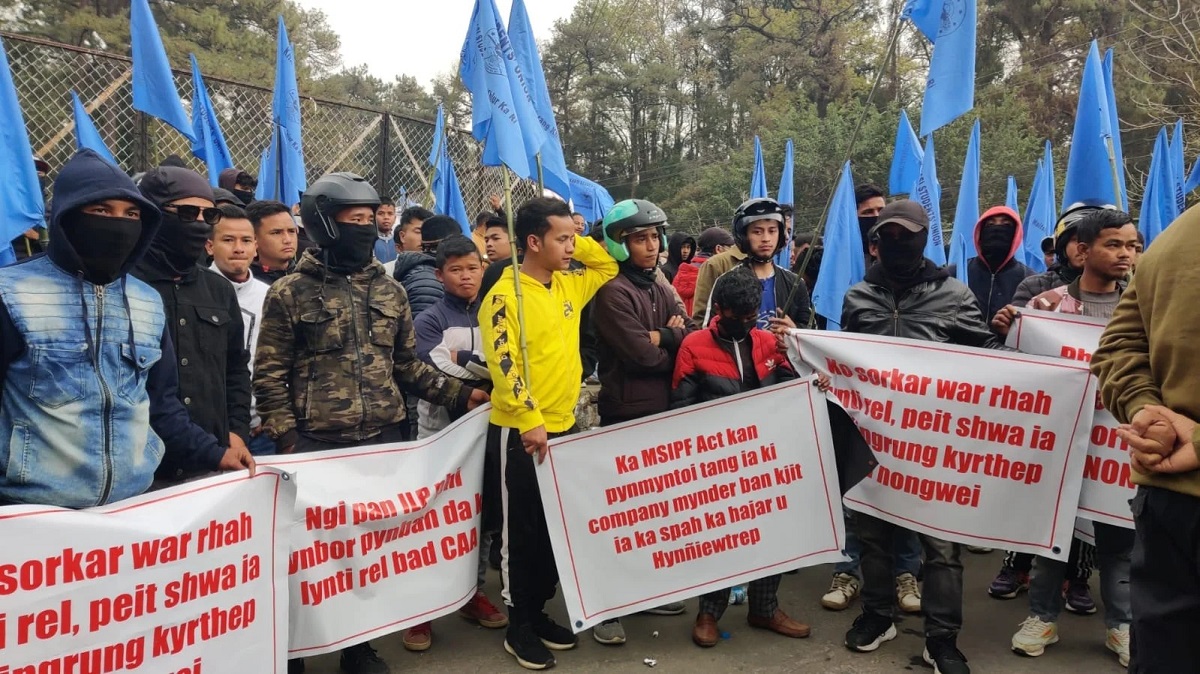
The Khasi Students’ Union (KSU) West Jaintia Hills District Unit has issued a strong warning to the Meghalaya government regarding the potential railway project in Khasi Hills, particularly emphasizing concerns about the possible future extension of railway tracks to Jaintia Hills. KSU asserts that the introduction of railway connectivity could exacerbate demographic changes, posing a threat to the survival of the indigenous Hynniewtrep communities. This alert is prompted by reports that the Northeast Frontier Railway (NFR) may conduct preliminary surveys for a proposed 135-km broad-gauge railway line from Chaparmukh to Jowai as early as 2026.
KSU President Laitphar Syngkrem articulated the organization’s steadfast opposition to railway development, which has been consistent since 2008-09. He stated that should the government attempt to force the installation of railways in Jaintia Hills, the union would have to resort to defending their land physically to protect future generations. The sentiment against the railway project is reported to be overwhelmingly negative among residents in Pnar-dominated villages, including Khliehriat, Sutnga, Narpuh, and Jowai town. Syngkrem accused proponents of the railway of being politically motivated or having personal financial interests tied to land deals and contracts.
Moreover, KSU highlighted the issue of non-tribal influx in Jaintia Hills, which has already increased due to the existing National Highway 6 corridor. The absence of an Inner Line Permit (ILP) in Meghalaya — in contrast to its presence in states such as Nagaland, Mizoram, and Arunachal Pradesh — was described as a significant vulnerability. KSU pointed out that despite demands for the implementation of ILP and stronger tenancy and land-transfer laws since 2013, successive state governments have failed to address these issues, thereby undermining tribal land ownership protection.
Syngkrem warned that if the railway project goes ahead, the Pnar people risk becoming a minority in their own districts within the next three to four decades, drawing parallels to the demographic shifts already seen in certain parts of Shillong city and Ri-Bhoi. He referenced the rapid growth of non-tribal enclaves in locations such as Lad Rymbai, Rymbai, and Lumshnong over the past two decades as evidence of this concerning trend.

